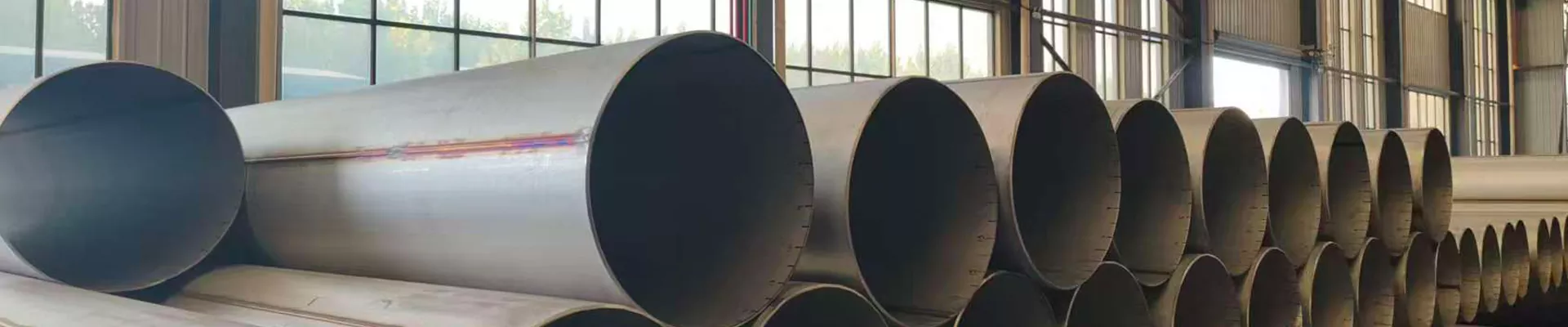
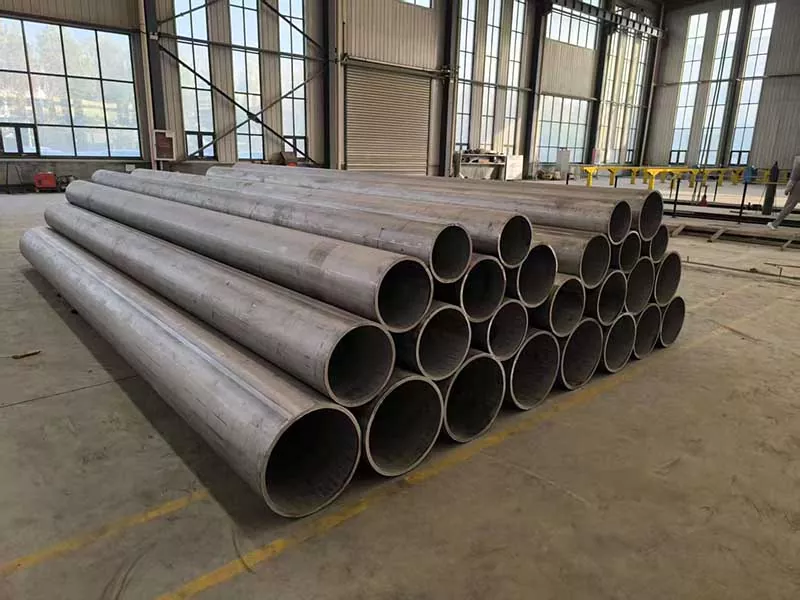
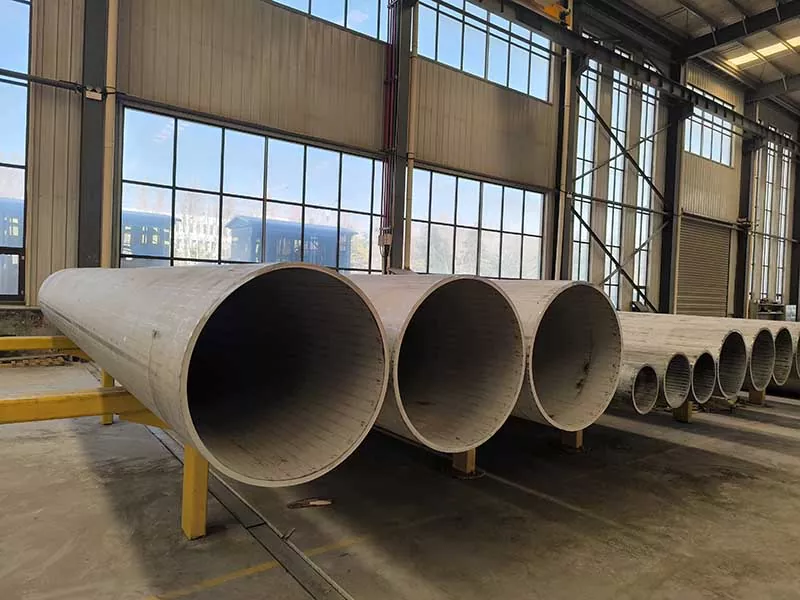
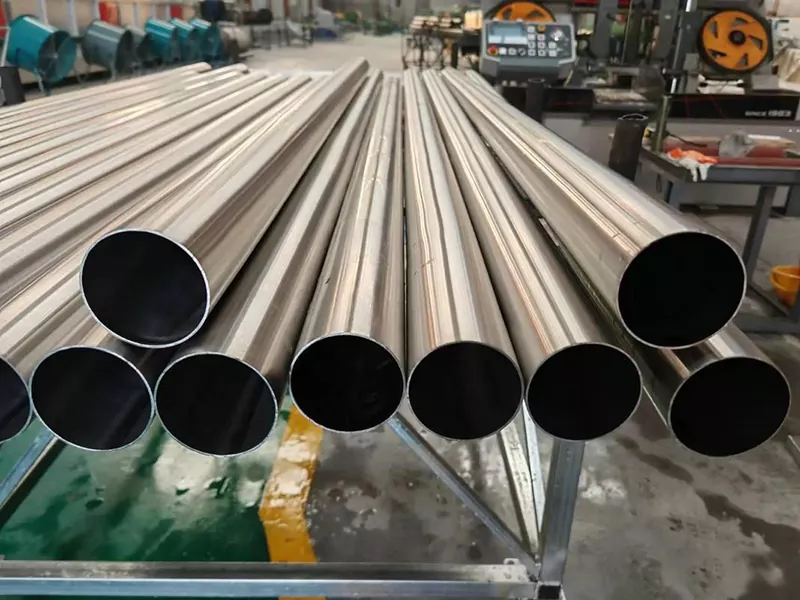
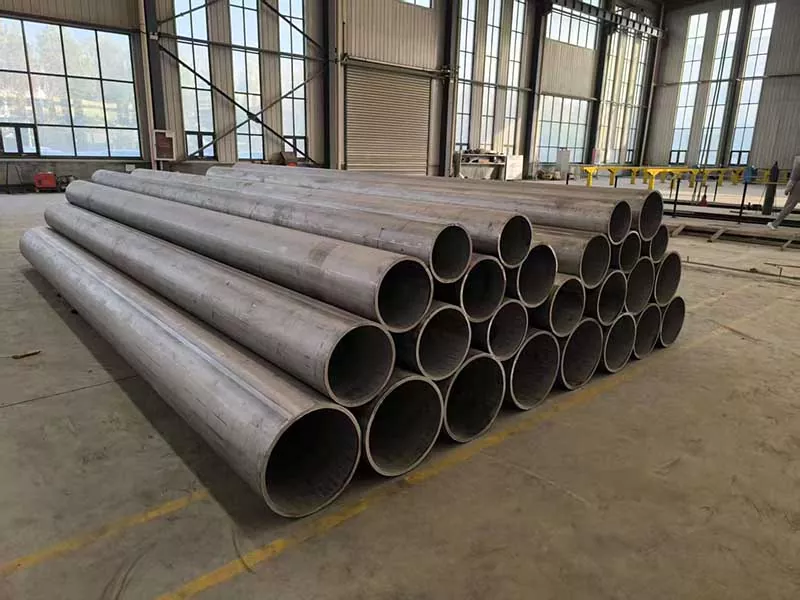
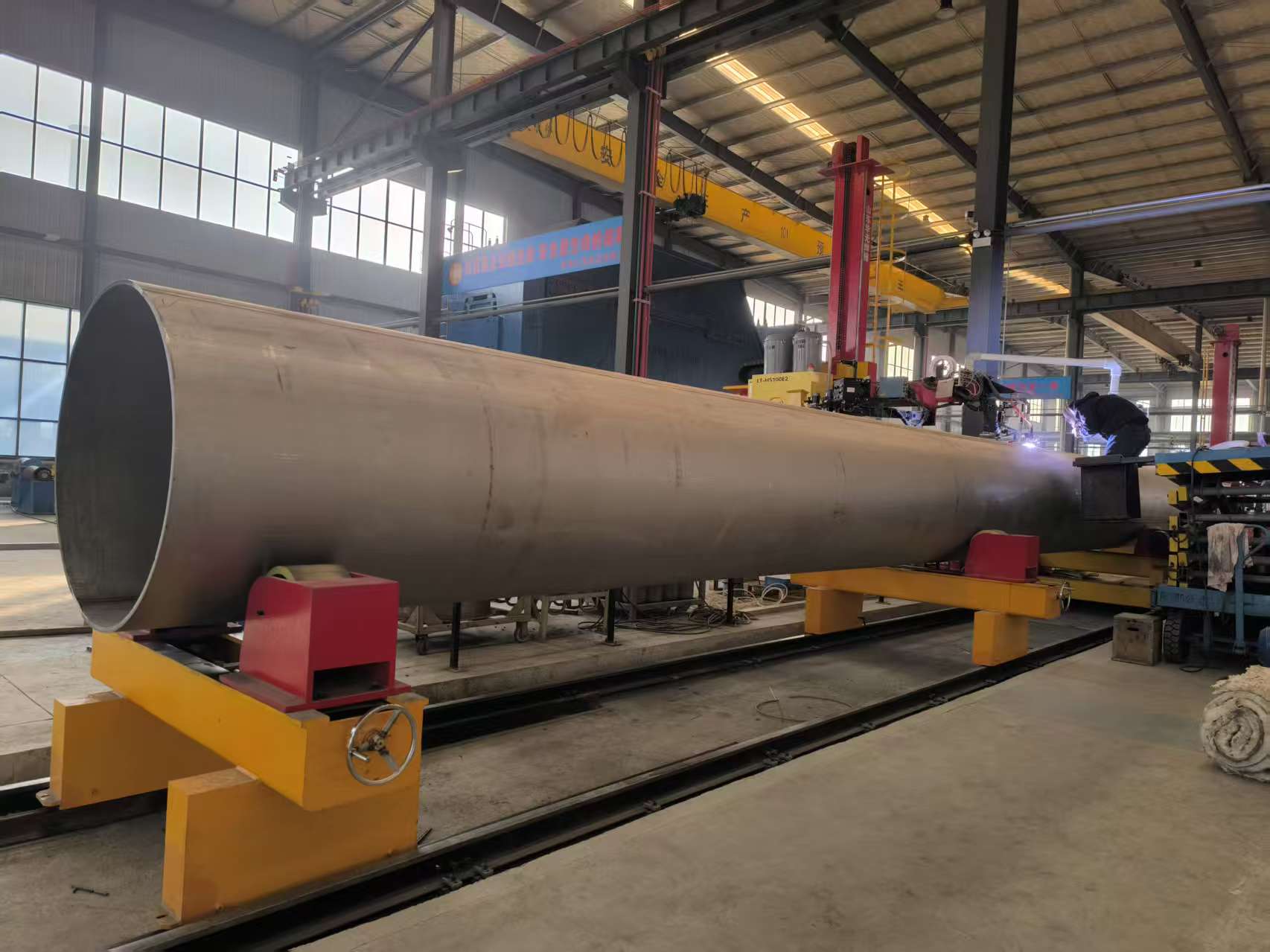
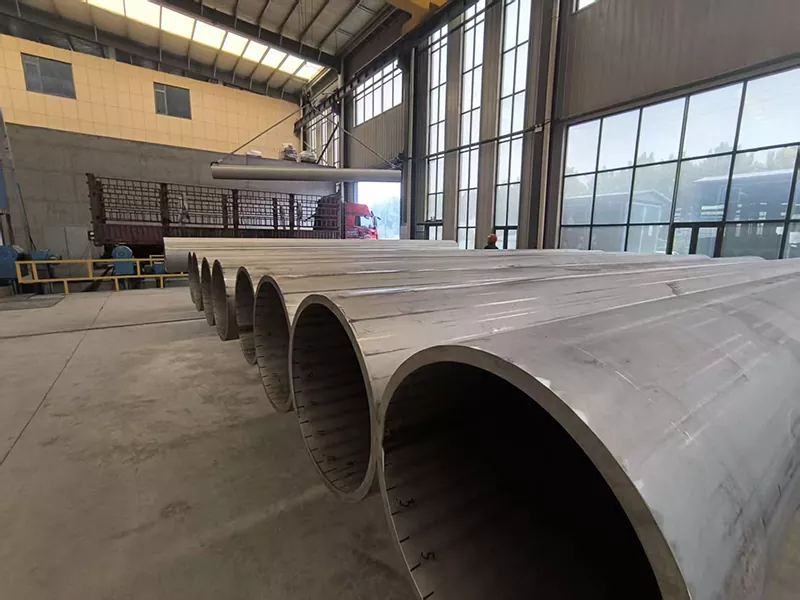
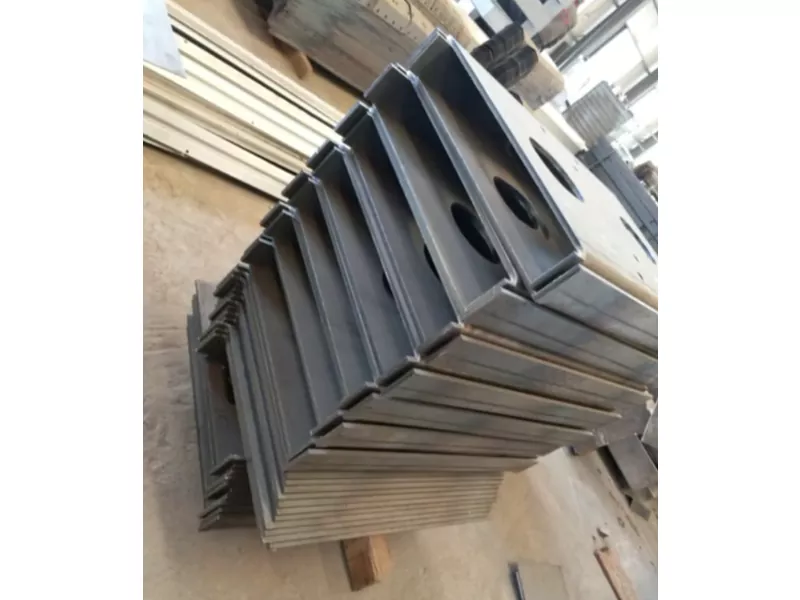
A stainless clad pipe, often called clad steel pipe, is a two layer product. The base layer is a structural steel such as Q345R, which carries the pressure and provides the wall strength. The cladding layer is a thin stainless sheet, usually 316L and usually between 0.5 mm and 3 mm, bonded metallurgically to the base so that the two behave as one plate. The bond is made by hot rolling, explosive bonding or overlay welding on the plate, and the clad plate is then formed and welded into pipe.
Why It Cuts Cost on Large Diameter Lines
Take a 1,200 mm outside diameter line in a mildly corrosive chloride service. In solid 316L the wall might be 12 mm of stainless all the way through. In clad construction it is a 12 mm Q345R base with a 2 mm 316L cladding, and only the 2 mm layer is stainless. The corrosion resistant surface is identical in both cases, but the mass of stainless drops by roughly 80 percent. Depending on the current nickel and molybdenum prices, that typically translates into a material cost reduction of 30 to 40 percent, plus lower weight, easier lifting and cheaper supports.
Where Clad Pipe Wins
Large diameter process and utility lines where corrosion is a surface phenomenon rather than a through thickness problem: chemical plant cooling water headers, flue gas desulphurisation piping, storage tank shells and bottoms, pulp and paper white liquor lines, seawater intake and outfall, fertiliser plant piping and food grade tanks. If the medium attacks the full section, or the code demands a solid stainless pressure boundary, cladding is the wrong answer.
Where You Should Not Use It
Small diameters below roughly 300 mm are rarely worth the fabrication complexity. Thin walls leave no room for a cladding layer plus a sound bond zone. Highly aggressive media such as hot concentrated chlorides, and services where the client specification already calls for solid stainless, should stay solid. The same applies to lines that will be welded and repaired many times in the field, where a damaged clad layer is harder to restore than a solid wall.
Welding a 316L plus Q345R Clad Pipe
Welding is where clad pipe succeeds or fails. The joint is made in three passes conceptually: the stainless cladding is welded with a matching 316L electrode to preserve corrosion resistance, a transition layer keeps dilution of the stainless by the carbon steel base under control, and the base is then completed with a carbon steel electrode matched to Q345R. The groove is machined so the cladding is not dragged into the structural weld, and the finished clad surface is pickled and passivated.
Testing That Actually Verifies the Cladding
Four checks matter. Ultrasonic testing of the plate or pipe to confirm the bond, with unbonded areas kept inside the limits agreed in the specification. Shear or bend testing of the bond interface on the plate, to the requirement of the clad plate standard. Penetrant testing of the cladding weld to catch surface cracks and porosity. Hydrostatic testing of the finished pipe as a pressure item, remembering that it proves the base, not the bond. Dimensional checks on cladding thickness at the ends, where the layer is most likely to be thinned by machining.
Mistakes That Undo the Savings
Calculating the pressure rating as if the whole wall were stainless, which wastes expensive cladding; calculating it as if the whole wall were carbon steel, which is unsafe. Ordering cladding thickness without stating the minimum at the finished pipe ends. Letting the welder run the stainless pass with a carbon steel electrode, which destroys the corrosion resistance for the first few hundred millimetres of every joint. Skipping the bond test because the plate arrived with a mill certificate. Each of these turns a cost saving into a repair.
How to Write the Specification
State the clad plate standard (GB/T 8165, ASTM A264 or NB/T 47002.1 depending on the market), the base grade and cladding grade, the cladding thickness with minimum values at the ends, the required bond quality, the welding consumables for each layer, the heat treatment or stress relief condition, the testing regime and the certificate type. A clad pipe specification that names all seven gets quoted correctly the first time.
What SHIWANG PIPE Supplies
Our Qingzhou and Yangzhou works form large diameter clad and stainless welded pipe on 8,000 tonne, 15 metre presses, with an annual capacity of 200,000 tonnes, working to ASTM, ASME, EN, DIN and GB specifications. Cladding is offered in 316L, 304L, 904L, duplex and super duplex over Q345R, Q245R or other structural grades, with third party inspection, bond testing and a stamped EN 10204 3.1 certificate.
Related reading on this site: stainless steel welded pipe for chemical engineering, stainless steel welded pipe for water treatment, and how chemical grade stainless welded pipes cut plant shutdown losses.
We use cookies to offer you a better browsing experience, analyze site traffic and personalize content. By using this site, you agree to our use of cookies. Privacy Policy